


The Institute for Family Studies recently had YouGov conduct a poll of 2000 American men aged 18-29. The first tranche of results have been released as a report called “America’s Demoralized Men.” It’s worth a read to understand how young men think about their world.
I won’t reproduce everything, but here are some highlights.
There’s been an interesting change in the milestones young men perceive as important to becoming an adult.
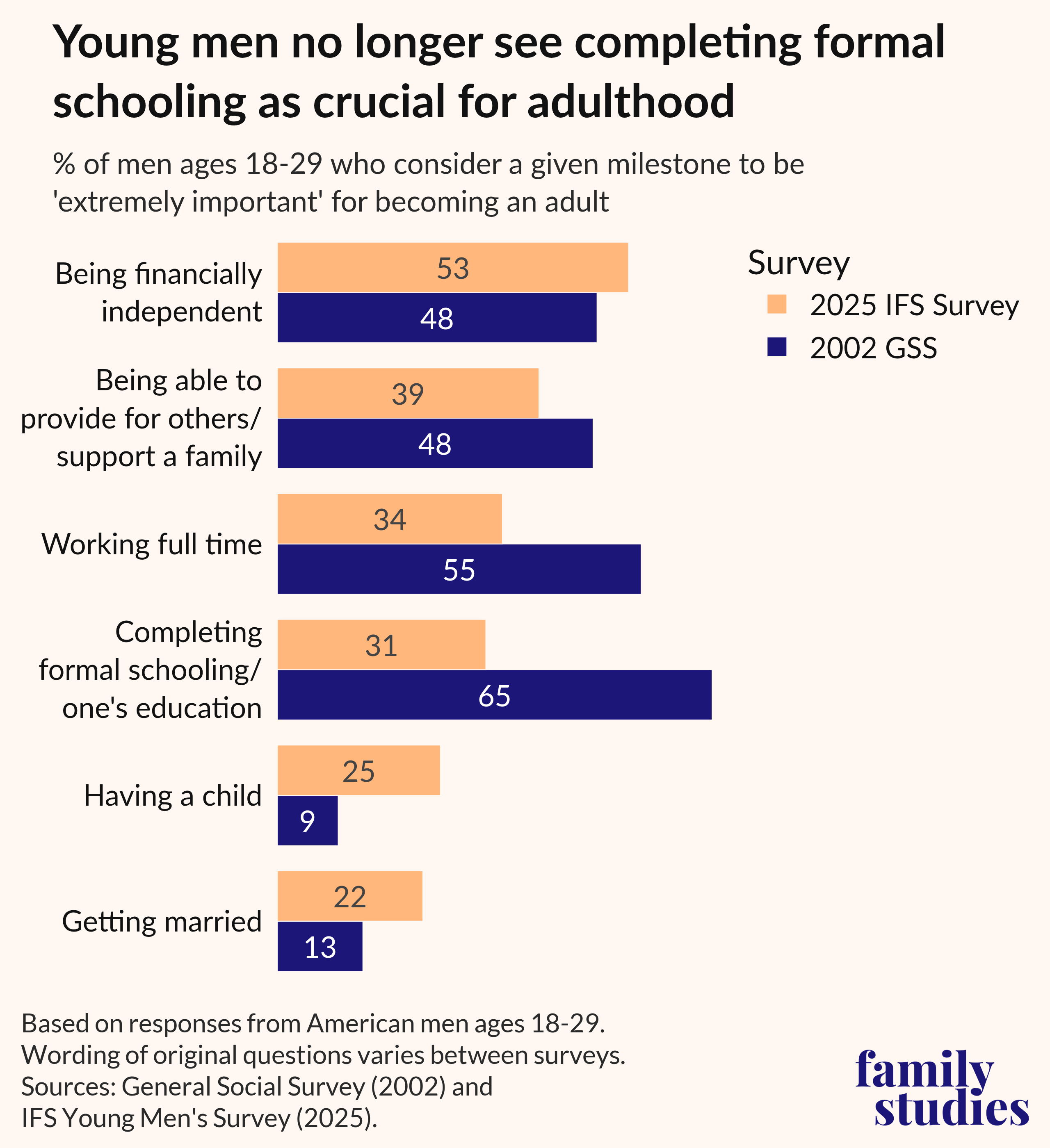
The study hones in on the drop in formal education, but what I find more interesting is the shift from “working full time” to “being financially independent.” My impression is that Gen Z people, both male and female, do not like the idea of a traditional 9-5 job. There’s an entire genre of Tik Tok videos of 20-something women crying about how they hate their 9-5 job. I hear plenty of stories about businesses struggling to recruit younger workers, who’d rather drive for Uber or Door Dash so that they can control their own schedule (and work on their aspirations to be a social media star). You can also see the popularity of hustle culture as feeding into this.
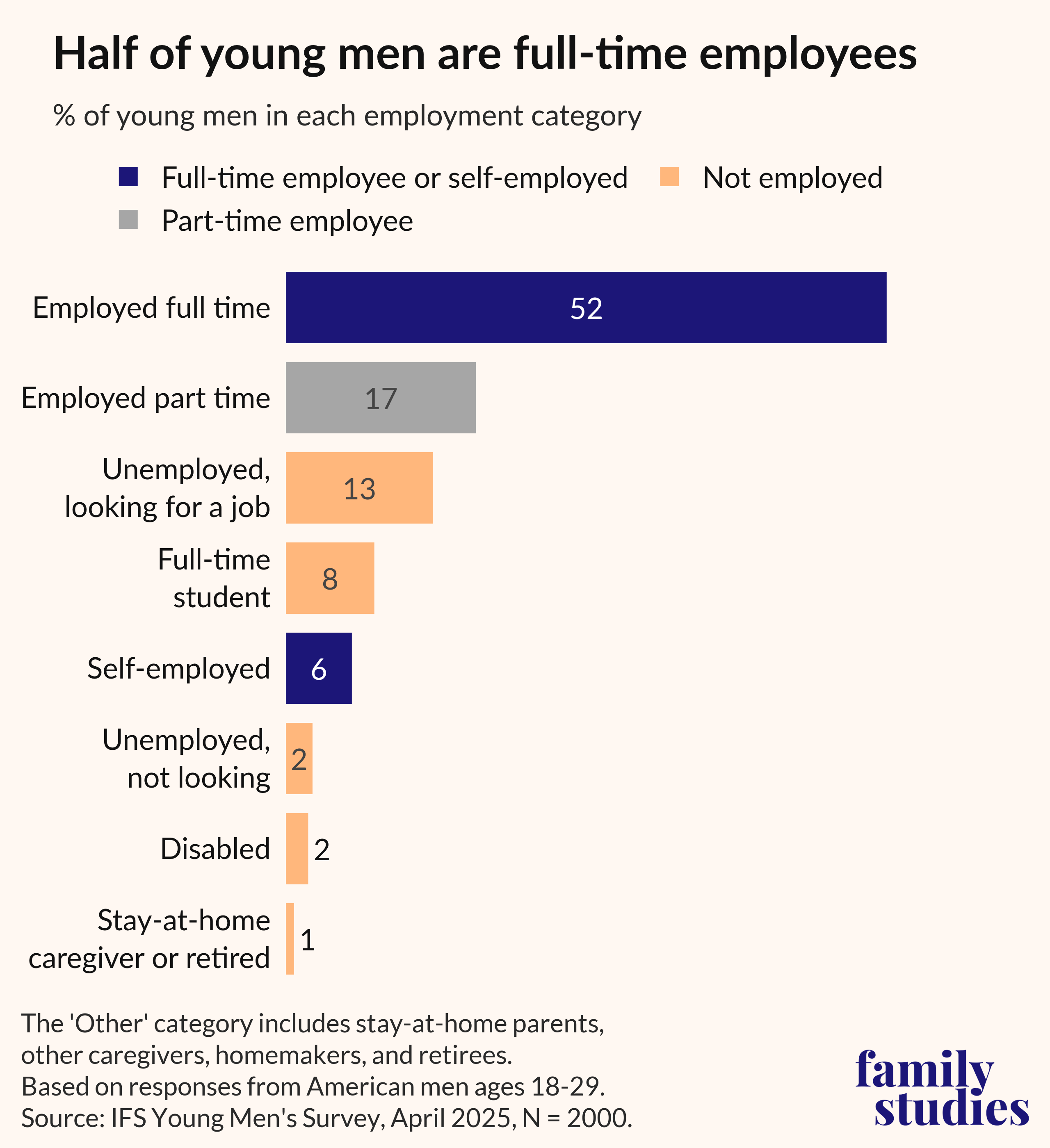
At the same time, most young men actually do have full time jobs.
There’s also an interesting look at education by various demographic characteristics. Keep in mind, many of the men surveyed are pretty young, and can’t be expected to have completed college yet.
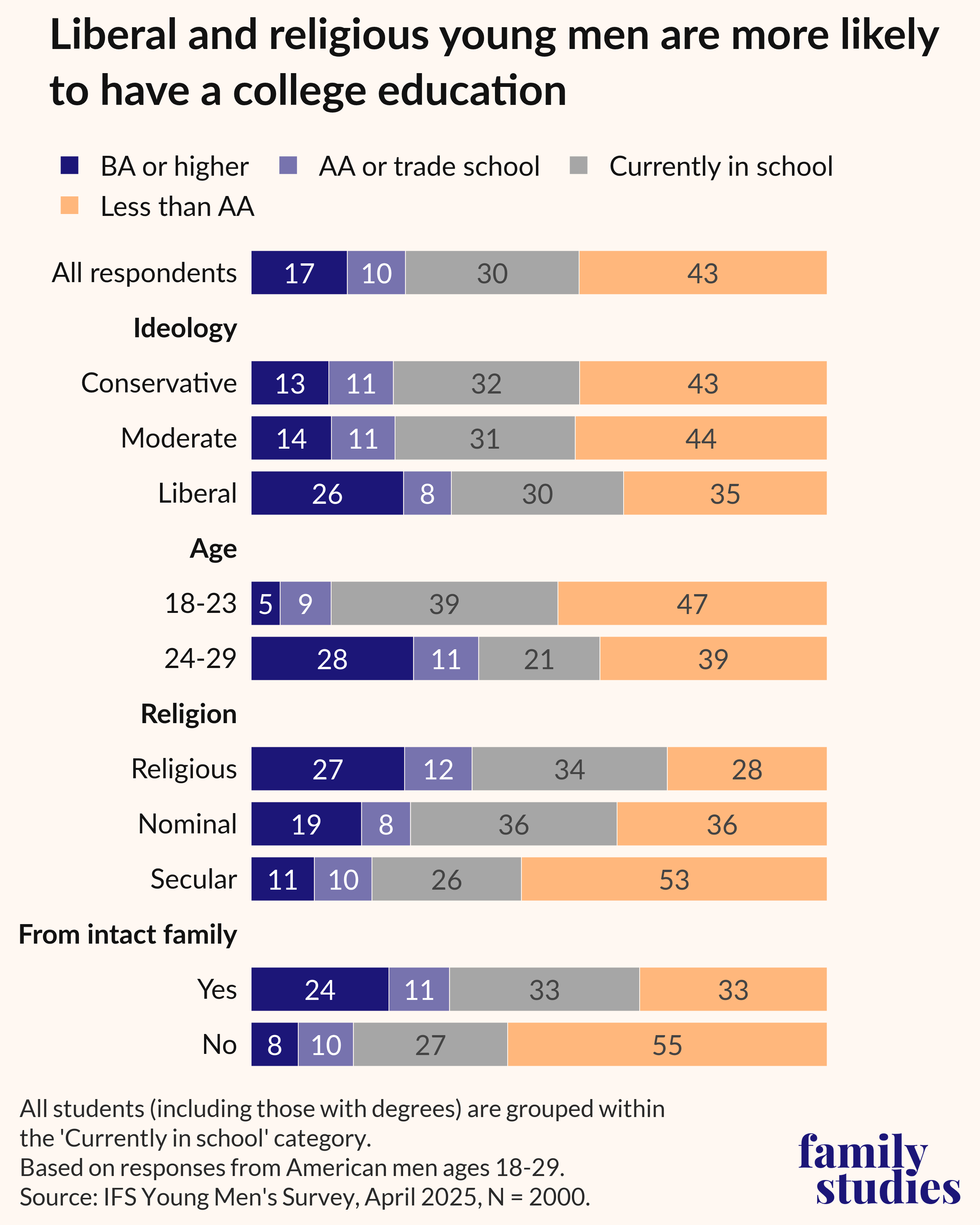
You’ve seen me write and tweet before about how there’s been a big leftward shift in the educated classes in America. Today’s GOP is alienating to educated, high functioning people in many respects, so I expect this trend to continue.
What we see here is that among Gen Z men, liberals are twice as likely to have a college degree than conservative ones. So the idea of young people being more conservative isn’t going to bail Republicans out there.
No surprise, we also see that religious people are more likely to have a degree (religious practice is positively correlated with education), and people from intact families are three time more likely to have a degree.
The survey has questions about dating and marriage. We see here that the majority of young men are afraid to ask women out.
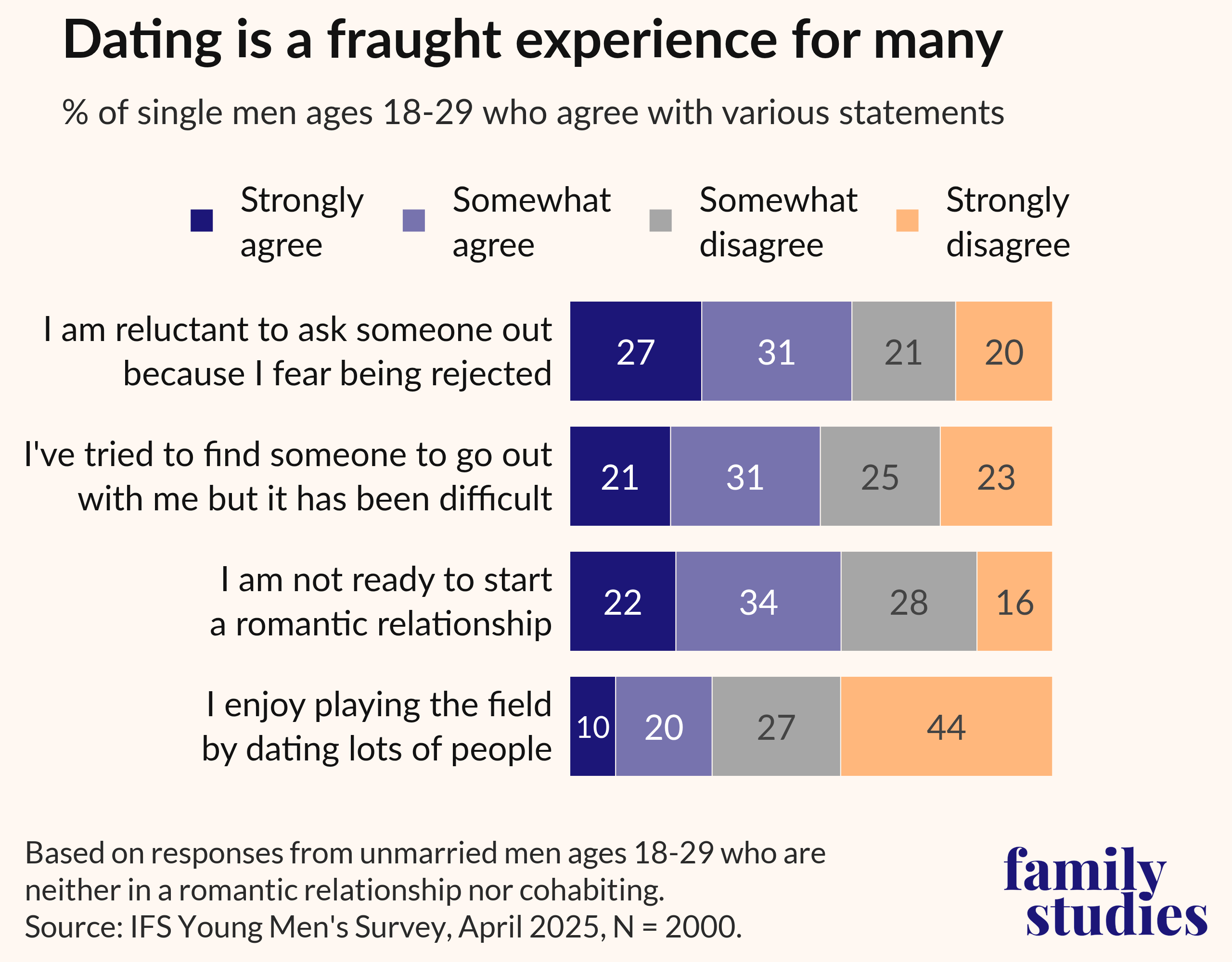
Most men have long been hesitant to ask women on dates. One of the biggest planks in the manosphere was about men forcing themselves to approach women in order to overcome “approach anxiety.” Their mantra was “always be approaching.” Helping men overcome nervousness here - and frame rejection as nothing shameful but something that happens to basically all men the majority of the time if they are actually asking people out - was one of the successful self-improvement items on their list. Today’s manosphere is more about validating men in not asking women out.
Lastly, I’ll highlight this interesting poll question about masculinity. The study emphasizes men agreeing with the idea that manhood is about sacrifice.
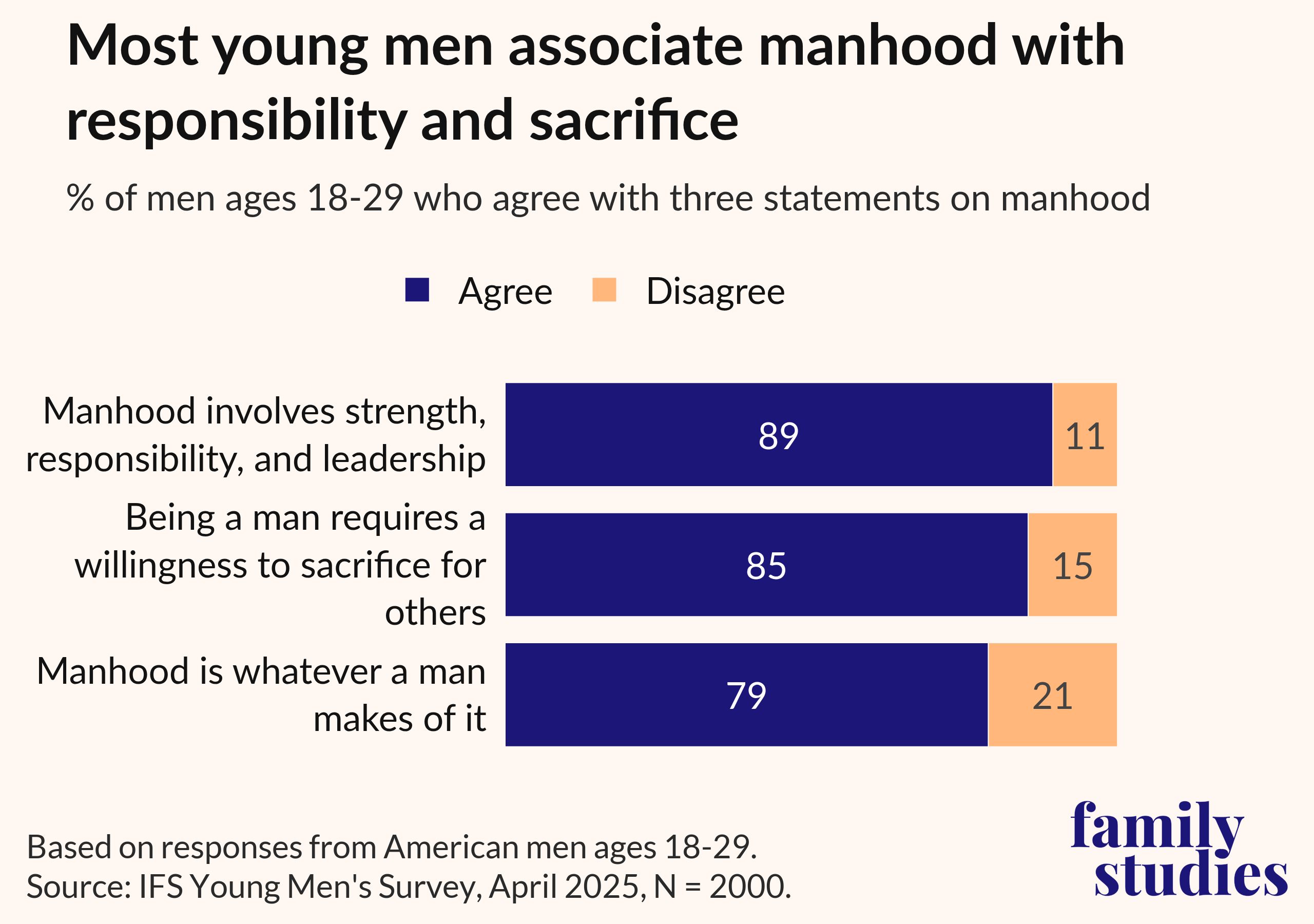
I find it more interesting that an even higher percentage of men said it included “strength” and “leadership.”
Almost everyone agrees that manhood involves sacrifice and service. But our society too often reduced it to that. I think this survey shows men are hungry for a definition in manhood that has more positive elements in it, like strength and leadership.
I could go on since there are so many interesting charts and findings in here. But I’ll let you click over and read the report for yourself.
I feel that the shift towards recognizing financially independent as the real goal, versus "working full time," is likely a realistic one. The point of work is not to work per se, it's to provide for ones material needs (and perhaps wants).
Notice also that the 2025 values that dominate are: "be financially independent," "get married," and "have a child." These are very personal things that affect one's life directly and profoundly. The 2002 cohort, besides "working full time," listed "completing a degree" and "being able to provide for others." The first two are essentially about external social validation, and "being able to provide for others" is actually pretty similar to (if a weaker statement than) being financially independent. Essentially, getting married and having a child (things that are rarer in young adults than they used to be) have replaced working full time and completing a degree, things which are even more common than they used to be. College degrees are slightly more common than they were in 2002, and unemployment was somewhat higher than following the dotcom crash. In each case, the "adulthood" differences seem to reflect things that were statistically a little rarer and harder for each generation at that point in their respective lives.
I'm not even a little bit surprised that liberal young men are more likely to have a degree. Significant elements within conservative culture actively discourage further education. This isn't universal of course, but it's meaningful and enough to show up in statistical outcomes. I distinctly remember being shamed when younger by some people for pursuing "secular" college education (as opposed to BJU, Liberty U, or similar).
Re: dating. I think the looksmaxing crowd does a lot of psychological damage to young men. But, the reality is that looks DO matter and the percentage of young men these days who are overweight/obese and don't even keep up their basic hygiene and appearance continues to climb. I suspect that many statements like "not ready to start a romantic relationship" probably reflect emotional self defense because relationships feel unattainable, rather than more than half of 18-29 year olds actually not feeling ready to pursue romantic relationships. The "fear being rejected" and "it's been difficult" results are unsurprisingly pretty similar in total percentage to the "not ready" crowd in this survey.
Also, if all advantages to females were stripped from education and employment, we would actually have a level playing field instead of the skewed nonsense we have now. The boomer and late gen x obsession with pleasing females no matter what is pretty pathetic anyways.