

All the Single Ladies
Rival visions of Christian womanhood, birthday party "weddings," and more in this week's digest.

For those of you in Chicago, I’ll be speaking at a First Things event on April 20 at 6:30pm called Can Christians Be Leaders? R. R. Reno and I will be discussing my article on the lack of evangelical elites.
I’ll again highlight the pending release of a new Canon Press book with people engaging with my “Negative World” idea. It’s called Welcome to Negative World: How to Read the Times You’re In, and you can now order it on Amazon.
I also want to make you aware that Real Clear Investigation is accepting applications for $20,000 grants to fund investigative reporting projects. Details await at the link.
What I’ve Been Up To
I’m presently in Savannah, Georgia, where I’m speaking at a small conference. This is part of an intense stretch of travel and speaking. I’ve got three events in three different cities the week of April 20, then hopefully a bit of a break.
I wanted to share pictures from some of the events I’ve done so far this year.
Back in January I spoke at the David Network conference. The David Network is a great group of faith-based Gen Z people from Ivy+ institutions. I was on a panel on the future of conservatism with Robert George from Princeton University, Patrick Deneen from Notre Dame, and Margarita Mooney Clayton from Princeton Seminary.
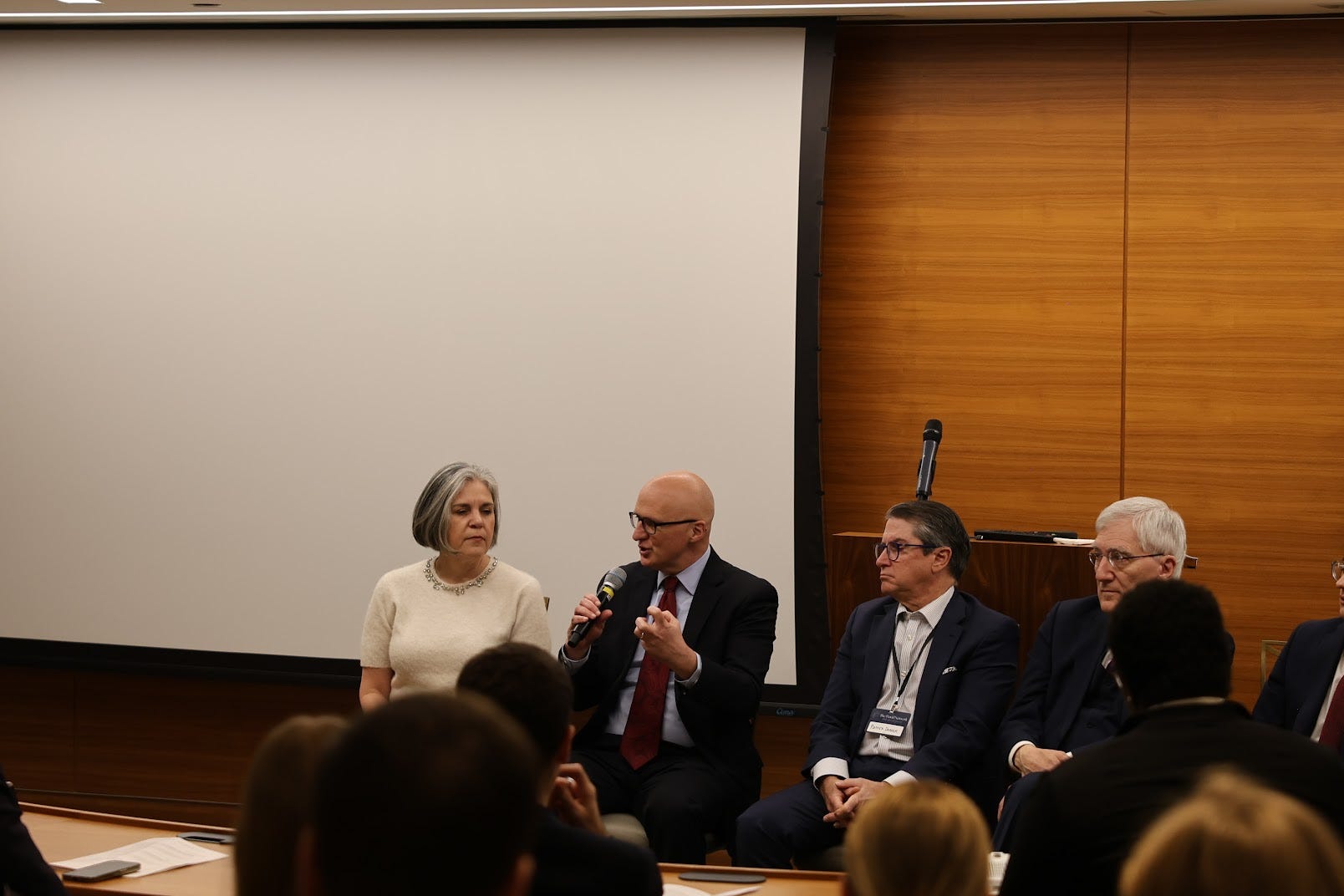
I previously had George on my podcast talking about the future of conservatives in academia, a topic he not only talks about, but has done a lot about. I’m planning to have Margarita Mooney Clayton on very soon, and Patrick Deneen is on my list.
I also spoke at an event sponsored by the National Marriage Project at the University of Virginia. I was on the keynote panel about troubled young men called “The Lost Boys.” The other speakers were Richard Reeves of the American Institute of Boys and Men, and Alvaro de Vicente, headmaster of the all boys school The Heights. UVa sociologist Brad Wilcox moderated.
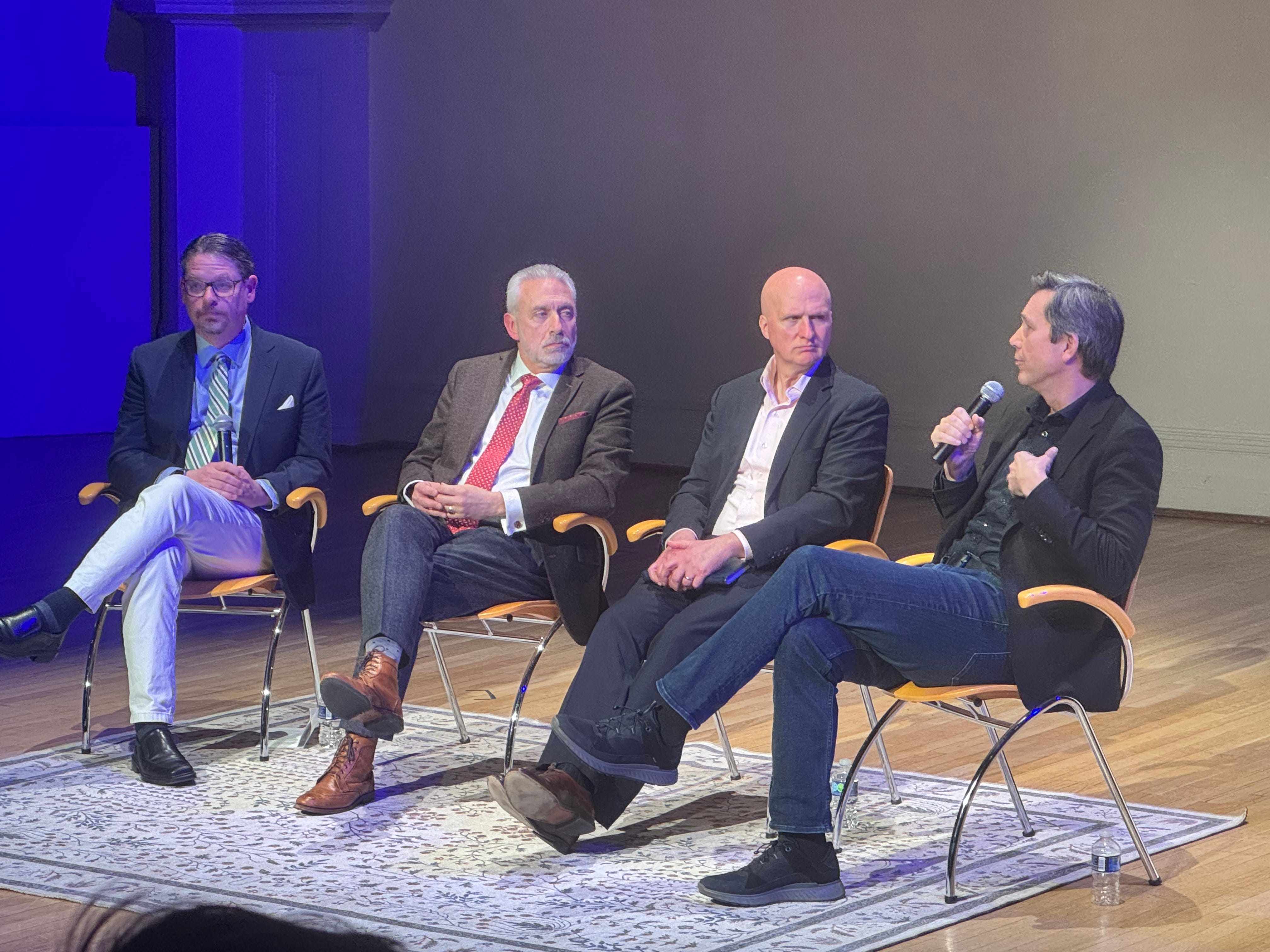
The video of our entire panel is also available to watch.
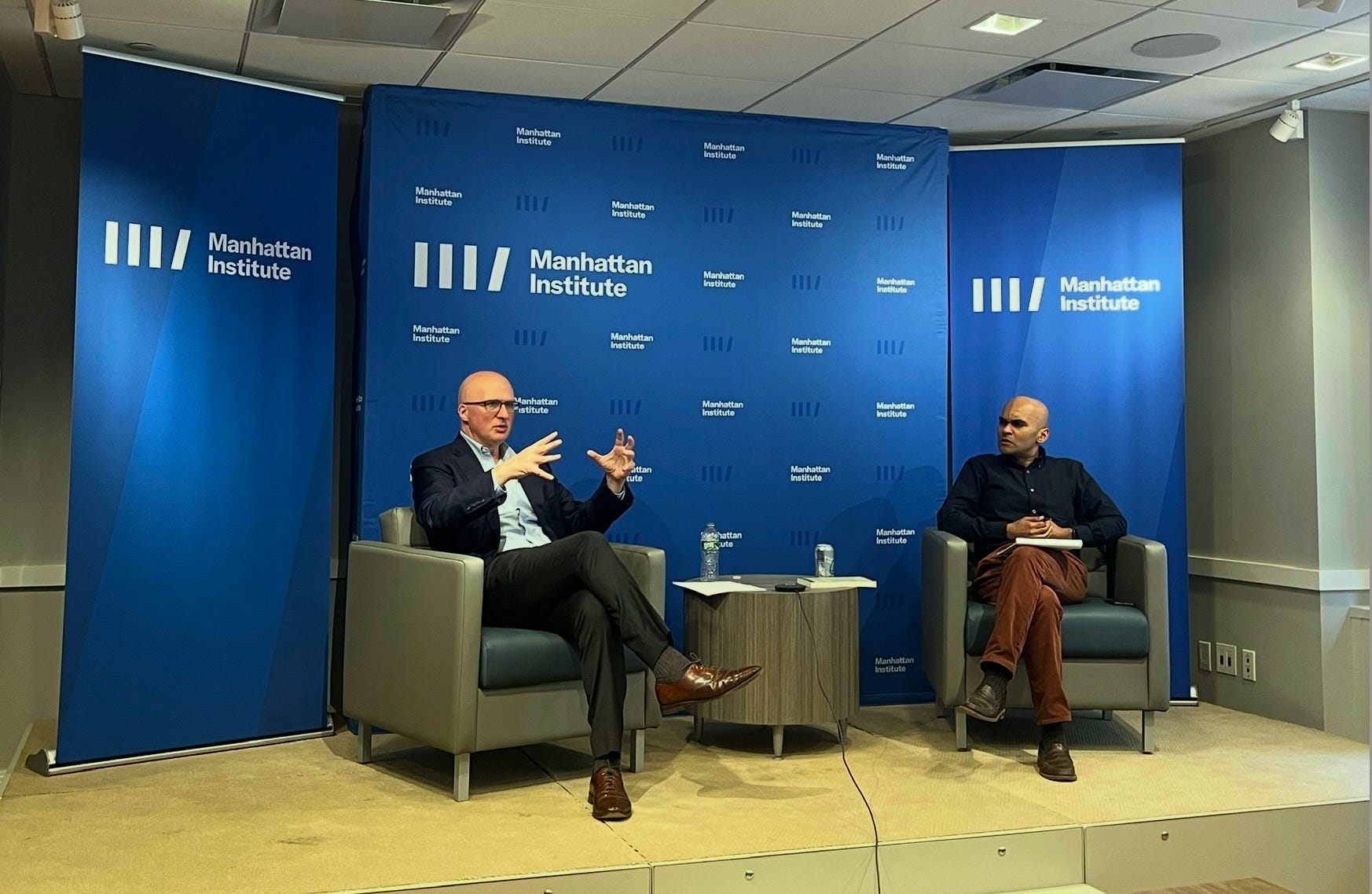
I have not gotten any photos from my Hephzibah House event in New York, but here’s one from a luncheon event I did at the Manhattan Institute while I was in town.
I was also in Washington, DC recently for a salon dinner hosted by American Affairs to discuss a recent article of mine. While there I was able to spend some time talking with my Senator Todd Young.
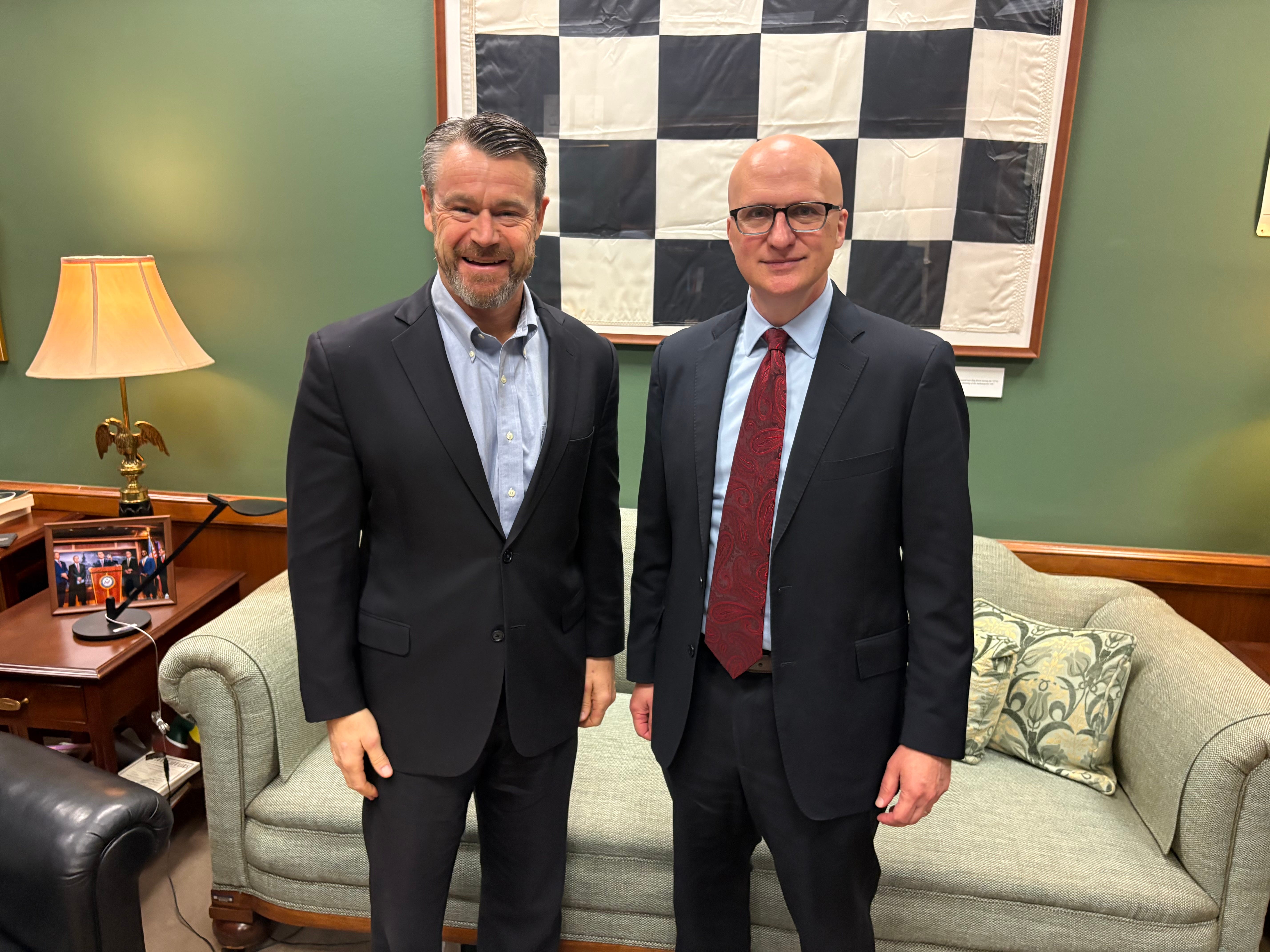
I’ve known my other Senator, Jim Banks, since he was in the House, but this was my first time meeting Sen. Young.
This isn’t even all the events I’ve done recently, just the ones I’ve managed to get pictures from so far.
Visions of Biblical Womanhood
The New Yorker ran an interesting piece comparing the visions of Christian womanhood in books by Jen Hatmaker and Emma Waters. The author, Emma Green, used to be the religion reporter at the Atlantic, and so knows this beat.
Waters is part of an emerging cohort of Gen Z writers trying to reclaim female empowerment for young women who are both religious and conservative. Just as evangelical deconstruction became its own subculture, which Hatmaker helped define, these new, young, family-oriented religious conservatives seem to be forging a potent subculture of their own.
…
At the same time, feminists have never quite known what to do with women like Schlafly or Waters, or, for that matter, with Charlie Kirk’s widow, Erika, other than calling them hypocrites for having big careers while singing the virtues of staying home. That kind of dismissal misses something important about the project that Waters is pursuing. She’s writing about women who find freedom in the constraints of motherhood and marriage, and insisting that there’s room for them to nurture both professional ambitions and a traditional home life, if not necessarily at the same time. Hatmaker felt small in her conservative world, but Waters doesn’t feel small in hers; instead, she feels relief from the relentless pressure to lean in. She doesn’t experience motherhood and marriage as a millstone she must bear on the way to career success, or as a source of ambivalence about her identity. She appears to be at peace in the conviction that she was made for both.
Jael is a sly choice of hero for Waters, because she’s so easy to cast as a girlboss. After all, it takes real determination to drive a tent peg through a man’s skull. But nobody owns Jael, and women don’t have to fit a feminist frame to be powerful. Waters is lucky enough to be a young woman in a world where she can freely choose her remix of a traditional life. The tent peg is in her hands now.
Click over to read the whole thing.
I’ve known Emma since before she married Jack. It’s exciting to see Gen Z people like her get such great press. I believe she’s also been included in NYT cover stories twice as well.
I had her on my podcast to talk about her new book.
All the Single Ladies
The NYT ran an interesting piece (gift link) about single women who are throwing themselves 40th birthday parties that are designed as if they were weddings.
For some single women, the milestone 40th birthday is more than a party. Instead of waiting for a partner to justify a celebration, women are using the moment as a declaration of empowerment and self-love, complete with wedding attire, a curated guest list of their closest friends and family and the joy and excitement of a wedding.
“People are getting married later in life,” said Sarah Adair, the founder of Social Bliss Events in Nashville, who has planned several wedding-style 40th birthdays for clients. “Women deserve to celebrate such a milestone with or without a partner.”
…
“So much of our adult lives are spent marking the traditional milestones you hear about your whole life — engagements, marriages, babies, first homes,” Ms. Bart, 43, said. “For women who aren’t partnered, there’s often no external occasion prompting this kind of celebration, so creating one yourself is a genuine declaration of self-worth.”
Alyssa Pettinato, the owner of Alinato Events in New York, helped her best friend plan a blowout wedding-style 40th birthday in March 2025. “Millennials like to party,” she said. “We like to show up and show out.”
Ms. Pettinato estimates that her friend, who is single and childless, spent nearly $50,000 on her 75-person affair at Le Jardinier in New York, which drew friends and family members from across the country.
Click over to read the whole thing.
Related:
NYT: Why Marriage, for So Many, Is Less Appealing Than Ever (gift link) - From Gen Z to Gen X, a pause in the march to the altar, or a decision to skip it altogether, is becoming more common
The Times of London wrote a piece about why women aren’t having babies. You’ll never guess who they blame.
And the Wall Street Journal wrote on the women who love the manosphere (gift link).
How We Gave Up on Forgiveness
The Financial Times is the world’s best newspaper, and has the best lineup on columnists, one of whom is Jemima Kelly. Her new piece on how we gave up on forgiveness is stellar. Since the FT has a very hard paywall, I’ll quote as much of it as I can justify.
“Father forgive them, for they know not what they do.” These words, spoken by Jesus on the cross at Calvary, according to the Gospel of St Luke, constitute the apotheosis of one of the most important virtues in Christianity.
At the time of his greatest suffering and as his mortal life was about to end, Jesus was asking God to show love and mercy towards those who had wrongfully condemned him to his imminent death. This courageous act of forgiveness, as all good Christians know, is one of Easter’s central messages. The sinless Jesus died on the cross in order to redeem all of us mortal sinners, so that we may be forgiven by God.
Indeed, forgiveness is a key theme throughout the New Testament, and thus forms an important part of what it means to be a Christian (and to be a follower of many other major religions, too). During the Sermon on the Mount, Jesus encouraged his followers to not only love their enemies as they would love their friends, but to pray for those who might persecute them. In the Lord’s Prayer, Christians ask God to “forgive us our trespasses as we forgive those who trespass against us”, connecting divine forgiveness of us imperfect humans with our own commitment to forgive others.
And yet, in our increasingly secular, consequentialist world, in which the very notion of virtue appears to have gone out of fashion, forgiveness is no longer much spoken about, or even held up as something to aspire to. In fact, it often seems to be considered as quite the opposite: something akin to moral weakness, or even altogether immoral.
Bizarrely, this is often the case when someone has not done the wrong thing but has said or even implied the wrong thing. The problem seems to be that they have thought the wrong thing; once they’ve said the wrong thing, they’re out. If you dare to “platform” them so that they might explain themselves or apologise, and in so doing “let them off the hook”, that can mean you’re out too. Guilt by forgiveness, you might say.
And so, faced with no route to redemption, those who are deemed to have done, said or thought the wrong thing are left in moral Mantua with their fellow deplorables, and often drawn into more extreme positions with no incentive to do otherwise, their voice amplified on one side of the spectrum by their very banishment from the mainstream.
Click over to read the whole thing.
Best of the Web
If you didn’t see this new essay in American Reformer from Georgetown professor Joshua Mitchell on the Reformation in America, it’s a very important and thought provoking essay. It inspired an entire newsletter edition from Ross Douthat interacting with his thesis, as well as mentions and comments from others too. I may write more about it, and hope to have Mitchell on the podcast to discuss it, but I wanted to flag this for you now with a very high commendation.
New Yorker: The Camps Promising to Turn You - or Your Son - Into an Alpha Male.
IM 1776: The Food Guidelines They Wanted
New Content and Media Mentions
I got mentions this week from Andrew Sullivan (actually about Joseph Holmes’ article) and Commonplace.
New this week:
Things That Are Getting Better - A hopeful counterpoint to the endless online negativity: modern life is advancing in surprising and practical ways
Love, Loss, and Land - In a cynical age, The Madison dares to portray good men, great marriages, and the healing power of place - A guest post by John Seel
Enough of the publications who push horrible lifestyles and ideologies. The ny times and new yorker are such trash and duplicitous. The fiscal times speaks of a longing for forgiveness. Forgiveness for what and why should that person apologize? Because they get more "extreme:. Extreme compared to what? This horrible neocon and neoliberalism philosophy espoused by nyc, la, and london? Why should anyone on the other side care what they have to say or what they pursue?
At a certain level, the "blowout party at 40" thing seems like more of an elite pathology than a genuine cultural trend. Only someone with waaaaaaay more dollars than sense could and would spend $50k on such an event.
That having been said, the NYT article's unwillingness to call this kind of thing out for the wasteful and self-indulgent narcissism that it is tells you all you need to know about the paper's issues.